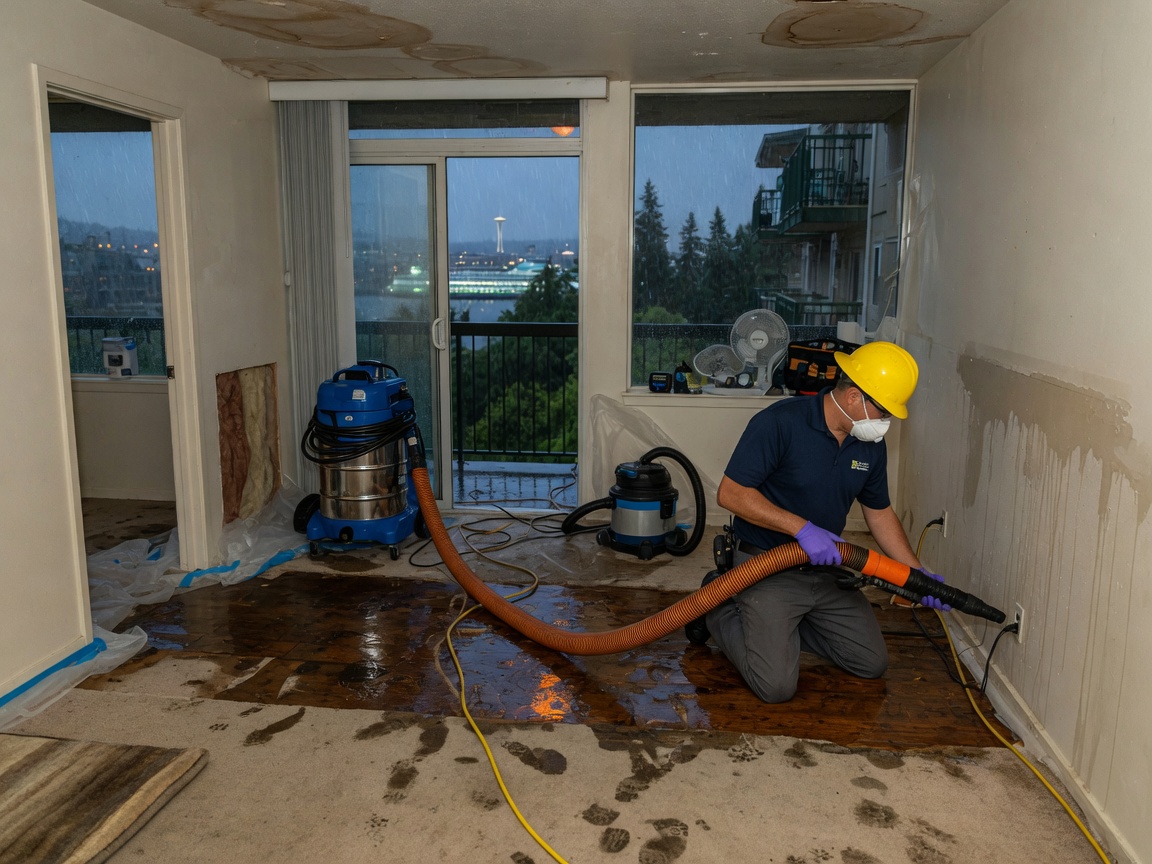
Seattle's frequent overcast skies and mild wet winters drive steady moisture intrusion into older housing stock found in neighborhoods like Capitol Hill and Queen Anne. Many homes built before 1950 feature balloon framing and plaster walls that hide leaks until damage reaches subfloors or shared walls with neighboring units. Technicians must account for limited crawlspace access and the risk of water migrating toward lower elevations near Elliott Bay.
Dry summers create a false sense of security because trapped moisture from winter storms can remain behind baseboards or under hardwood floors in Ballard and Fremont properties. Restoration crews use moisture meters calibrated for Pacific Northwest lumber species and run commercial air movers longer than in drier climates to prevent secondary mold growth. Bellevue and Kirkland jobs often involve townhomes with shared foundations where water crosses property lines.
King County code requires proper disposal of saturated drywall and insulation when water contacts electrical components. Crews document every step with photos because insurance adjusters in Tacoma and University District routinely request proof that drying reached 15 percent moisture content before reconstruction begins. Terrain around Discovery Park and West Seattle slopes means gravity-fed drainage failures are common after heavy rain events.
Belltown high-rises and Pike Place Market area commercial spaces present unique challenges with concrete decks and membrane failures that allow water to travel several floors before surfacing. Restoration plans must coordinate with building management to isolate HVAC zones so spores do not circulate through shared ductwork during the drying phase.
Technician insight
In Seattle the thing that catches most people out with water damage restoration is how the mild wet winters let slow leaks in 1920s balloon-frame homes in Fremont travel down interior walls and pool under the main floor without obvious ceiling stains until the floor joists start to soften.
Fremont Floor Leak
Water from a second-floor bathroom leak in a 1928 Fremont house migrated behind plaster and collected under the dining room subfloor. Infrared scans revealed elevated moisture across three joist bays that standard visual checks missed. Extraction and targeted drying prevented joist replacement while keeping the original fir floors intact.
Water Damage Restoration Services We Offer
✓Emergency Water Extraction
Rapid removal of standing water from basements and ground floors in Capitol Hill and Queen Anne using truck-mounted pumps to limit structural saturation.
✓Structural Drying and Dehumidification
Placement of industrial dehumidifiers and air movers in Ballard and Fremont homes to bring moisture levels below 15 percent before mold sets in.
✓Hidden Moisture Detection
Infrared scanning and probe readings behind walls and under floors in older University District properties to locate water that migrated from roof or plumbing leaks.
✓Category 3 Water Cleanup
Safe handling and disposal of contaminated floodwater from street or sewer backups affecting West Seattle and Belltown buildings per King County health guidelines.
✓Hardwood Floor Restoration
Drying and refinishing of original fir and oak floors common in 1920s Seattle homes without removing tongue-and-groove boards when possible.
✓Post-Flood Reconstruction
Replacement of damaged drywall, insulation, and trim in Kirkland and Bellevue properties after drying is complete and documented for insurance.
Water Damage Restoration Cost in Seattle, WA
| Service | Typical Range | What Affects It |
|---|---|---|
| Initial Assessment And Moisture Mapping | $175–$350 | Higher in multi-story Capitol Hill homes with limited access. |
| Emergency Extraction Per Day | $450–$900 | Includes pump truck and labor; increases with Category 3 contamination. |
| Equipment Rental For Drying | $250–$600 per week | Based on number of air movers and dehumidifiers needed for older plaster walls. |
| Hidden Leak Detection Add-On | $150–$275 | Infrared scan plus probe readings in Fremont balloon-frame houses. |
| Final Clearance And Documentation | $125–$225 | Required for insurance claims in King County. |
Ranges are typical for Seattle, WA and confirmed with an exact written quote before any work starts.
How it works
- 1
On-Site Assessment
Technician arrives from the 1410 Elliott Ave W location, documents moisture readings, and identifies migration paths through the specific home's framing.
- 2
Water Removal
Standing water is extracted and Category 3 waste is separated for proper disposal before drying equipment is staged.
- 3
Drying And Monitoring
Daily moisture logs track progress in walls and subfloors until readings stabilize across multiple rooms.
- 4
Sanitation And Reconstruction
Affected materials are removed, surfaces treated, and new finishes installed once drying goals are met.
Pricing
Upfront quotes provided after inspection; final cost depends on water category, square footage affected, and drying duration required by Seattle weather conditions.