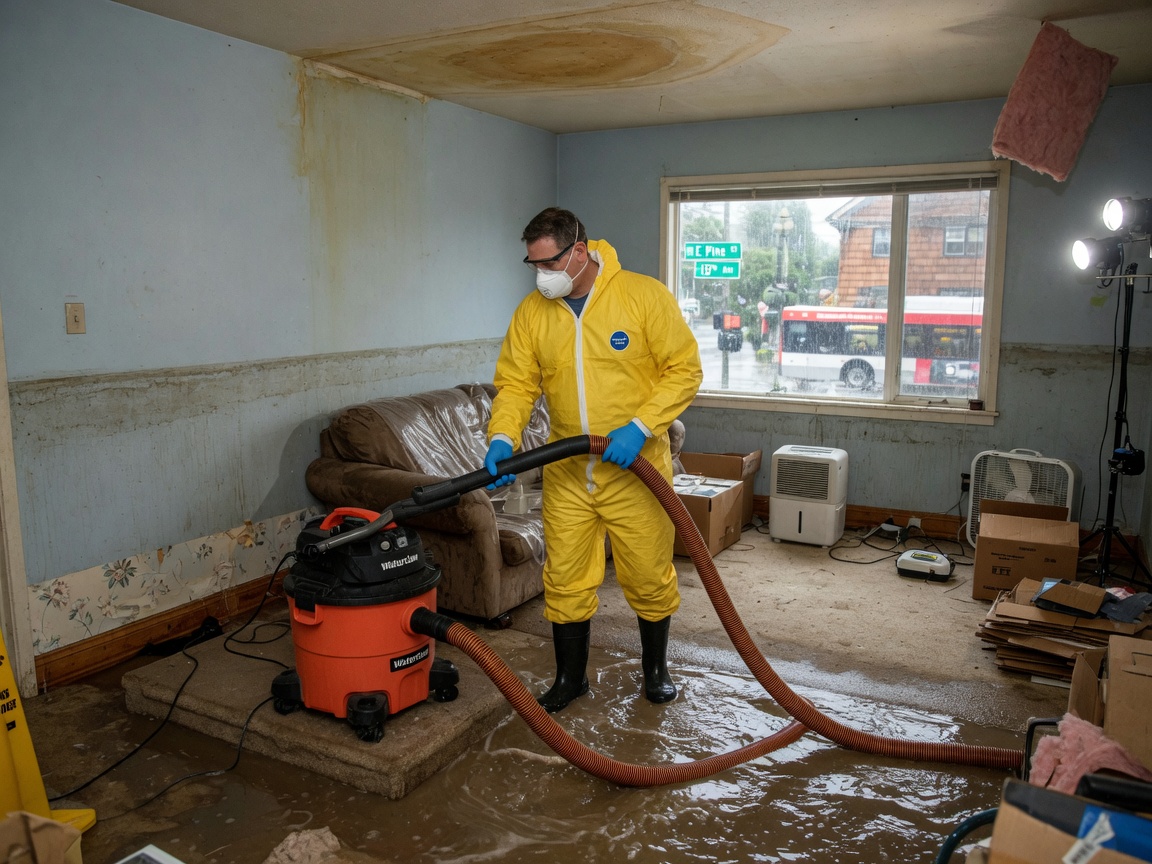
Seattle's mild wet winters bring prolonged rain that soaks into the crawl spaces and basements common in pre-1960 homes throughout Capitol Hill, Queen Anne, and the University District. Water migrates along the sloped terrain toward Lake Union and Puget Sound, saturating older plaster and lathe walls plus hardwood floors that trap moisture longer than modern materials. Technicians must map hidden pockets behind built-in cabinetry and under pier-and-beam foundations to prevent secondary mold growth during the frequent overcast days that slow natural drying.
In Ballard and Fremont, many single-family homes sit on fill or near the ship canal where high water tables rise during storms. Extraction crews use truck-mounted pumps to pull standing water before it reaches electrical panels or forced-air ducts, then deploy air movers and dehumidifiers sized for the square footage and insulation type. Bellevue and Kirkland jobs often involve townhomes with shared walls, requiring coordination to avoid pushing moisture into neighboring units during the dry summer months when irrigation leaks become the main culprit.
West Seattle and Belltown properties face wind-driven rain against stucco and brick exteriors, plus occasional sewer backups tied to aging King County lines. Cleanup includes removing saturated carpet padding, treating subfloors with antimicrobial solutions, and documenting moisture readings at multiple depths so homeowners can see when levels return to the 10-12 percent range typical for local lumber. Crews based at 1410 Elliott Ave W respond during posted hours to limit the window for structural swelling in these dense urban settings.
Technician insight
In Seattle, the thing that catches most people out with Water Damage Cleanup is how mild wet winters and overcast skies let moisture linger inside the unvented crawl spaces of 1920s–1950s homes in Fremont and Queen Anne, turning a small roof leak into widespread subfloor rot before anyone notices.
Crawl Space Saturation After Heavy Rain
Water entered a Ballard home through a foundation crack during a prolonged winter storm. Inspection revealed saturated insulation and mold starting on joists under the kitchen. Crews extracted water, dried the space over four days, and treated surfaces so the homeowners could keep the original fir floors.
Water Damage Cleanup Services We Offer
✓Emergency Water Extraction
Rapid removal of standing water from basements and crawl spaces in Capitol Hill and Queen Anne homes before it reaches electrical systems or insulation.
✓Structural Drying and Dehumidification
Placement of industrial equipment to pull moisture from older plaster walls and hardwood floors common in Fremont and Ballard properties.
✓Crawl Space Water Cleanup
Targeted pumping and drying under pier-and-beam homes in the University District where high water tables and sloped lots concentrate runoff.
✓Sewer Backup Remediation
Safe extraction and disinfection after line failures in West Seattle and Belltown, protecting against contaminated water in older King County infrastructure.
✓Content Drying and Salvage
Assessment and treatment of furniture, rugs, and documents in University District apartments to reduce replacement costs after leaks.
Water Damage Cleanup Cost in Seattle, WA
| Service | Typical Range | What Affects It |
|---|---|---|
| Initial Assessment And Moisture Mapping | $150–$350 | Varies by number of rooms and crawl space access in older Seattle homes. |
| Water Extraction Per 100 Sq Ft | $200–$500 | Higher for contaminated water or multi-level properties in Capitol Hill. |
| Equipment Rental Per Day | $250–$600 | Depends on dehumidifier size needed for wet winters in King County. |
| Content Drying And Handling | $300–$800 | Based on volume of rugs, furniture, and documents in University District units. |
Ranges are typical for Seattle, WA and confirmed with an exact written quote before any work starts.
How it works
- 1
On-Site Assessment
Technicians arrive from 1410 Elliott Ave W, inspect affected rooms, and record moisture levels in walls, floors, and subflooring across Seattle neighborhoods.
- 2
Water Removal
Pumps and vacuums extract standing water from basements and crawl spaces before it migrates into adjacent areas in Capitol Hill or Ballard.
- 3
Drying And Monitoring
Air movers and dehumidifiers run while daily readings track progress until materials reach safe moisture content for local climate conditions.
- 4
Final Clearance
Final walkthrough confirms no hidden damp spots remain, with documentation provided for insurance and homeowner records.
Pricing
Upfront quotes based on visible scope and access; final cost depends on square footage, depth of saturation, and whether contents require separate handling.