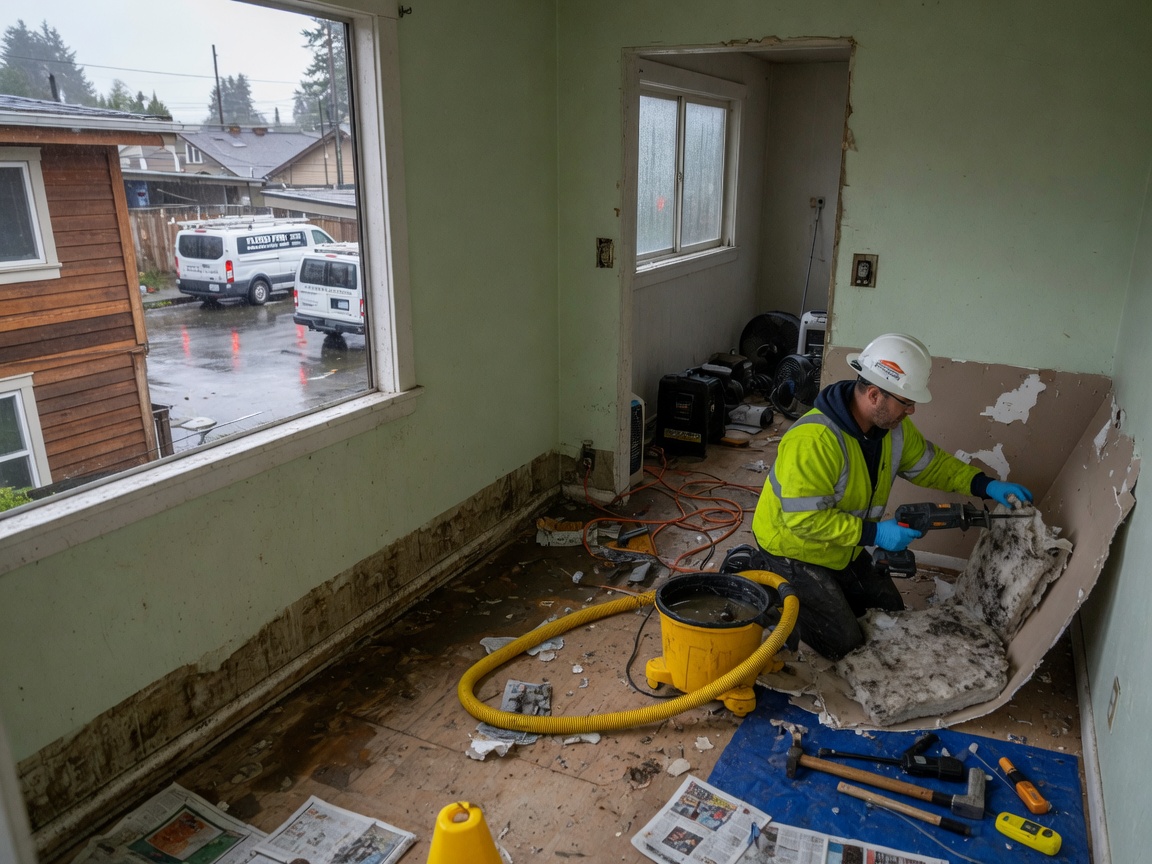
Seattle’s mild wet winters bring repeated heavy rain that overwhelms older storm drains and downspouts, especially in Capitol Hill and Queen Anne where many homes built before 1950 have basements with limited waterproofing. When floodwater enters, it quickly saturates plaster, lathe, and hardwood floors that are common in these neighborhoods. Fast extraction and targeted drying prevent hidden moisture from reaching joists and subfloors that sit directly on King County’s damp clay soils.
West Seattle and Ballard properties near Discovery Park or the Ship Canal often see tidal-influenced groundwater rise during prolonged wet spells. We map moisture with thermal imaging because carpet pads and insulation behind kitchen cabinets can stay wet long after visible water is gone. Removing affected materials before mold sets in keeps the job smaller and avoids the need for full-room gutting that Tacoma or Bellevue homeowners sometimes face when water sits for days.
University District rentals and Belltown condos present different challenges: slab-on-grade construction and shared walls mean water can travel to neighboring units. We isolate affected zones, use commercial air movers, and monitor humidity daily so the drying process meets the tighter timelines required in multi-family buildings. This approach limits disruption while addressing the overcast summers that slow natural evaporation.
Technician insight
In Seattle the thing that catches most people out with flood damage repair is how quickly water travels under the tongue-and-groove hardwood found in pre-1940 homes in Capitol Hill and Fremont; once it reaches the crawlspace or slab edge the drying time doubles because our clay soils hold moisture for weeks after the rain stops.
Queen Anne basement after December rain
Water entered through an old foundation crack during a week-long wet spell. We found saturated insulation behind the laundry room wall and moisture traveling under the living-room floor. Extraction and targeted drying kept the job to two rooms instead of the entire lower level.
Flood Damage Repair Services We Offer
✓Basement Flood Extraction
Rapid removal of standing water from older Seattle basements using submersible pumps and moisture mapping to protect lathe-and-plaster walls common in Capitol Hill and Fremont homes.
✓Stormwater Damage Drying
Commercial dehumidifiers and air movers placed to pull moisture from hardwood and subfloors after heavy rain events that affect low-lying areas near the Ship Canal and Ballard.
✓Sewage Backup Remediation
Safe cleanup and disinfection of contaminated water from overloaded King County sewer lines, with full removal of affected porous materials to prevent lingering odors in Queen Anne properties.
✓Structural Drying After Flooding
Targeted drying of wall cavities and floor systems in West Seattle and University District homes where groundwater seeps through older foundations during extended wet winters.
✓Flooded Flooring Removal
Careful extraction of saturated carpet, pad, and hardwood in Belltown condos and Capitol Hill houses to stop water from migrating into shared walls or neighboring units.
Flood Damage Repair Cost in Seattle, WA
| Service | Typical Range | What Affects It |
|---|---|---|
| Emergency water extraction | $450–$1,200 | Depends on volume and access in older basements |
| Full drying package | $800–$2,400 | Equipment runtime and number of rooms in Capitol Hill or Ballard homes |
| Flooring and drywall removal | $600–$1,800 | Square footage and disposal fees in multi-unit buildings |
| Sewage contamination cleanup | $1,200–$3,500 | Level of contamination and PPE requirements |
Ranges are typical for Seattle, WA and confirmed with an exact written quote before any work starts.
How it works
- 1
On-Site Assessment
We arrive at your Seattle address, document the source and extent of flooding, and use moisture meters on walls and floors common in older King County homes.
- 2
Water Extraction
Standing water is removed with pumps and wands, focusing on low spots created by Seattle’s hilly terrain in neighborhoods like Queen Anne and West Seattle.
- 3
Drying and Monitoring
Equipment is placed and humidity is tracked daily until materials reach safe levels, accounting for the region’s frequent overcast skies that slow natural drying.
- 4
Material Removal and Restoration
Damaged flooring and drywall are removed where needed, then replaced with drying-resistant materials suited to Seattle’s wet climate.
Pricing
Most flood damage repair jobs in Seattle fall into a mid-range cost based on square footage affected and how quickly water is addressed.