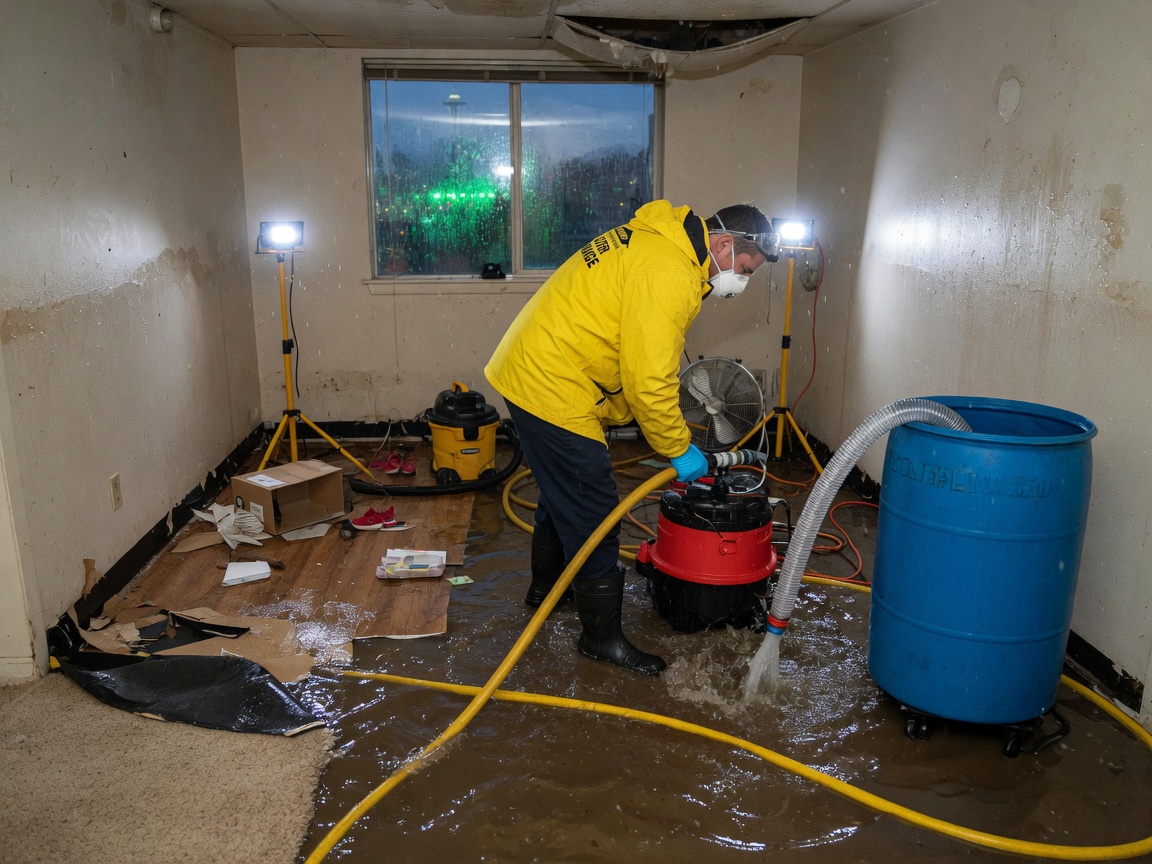
Seattle's older housing stock in neighborhoods like Capitol Hill and Fremont often features crawl spaces and basements with limited access points. When pipes burst or rain overwhelms downspouts during the region's mild wet winters, water pools against foundation walls and travels under flooring. Extraction crews must navigate narrow entries while protecting electrical systems common in homes built before 1950.
Overcast skies and high humidity even in summer slow natural evaporation, so hidden moisture lingers behind lath-and-plaster walls in Queen Anne and University District properties. Technicians use moisture meters to locate saturation that standard fans miss, then direct high-velocity air movers into those cavities. Failure to address these pockets leads to recurring musty odors that travel between floors in multi-story homes near the Space Needle.
King County regulations require proper disposal of extracted water when it contacts sewage lines, which happens frequently in Belltown and West Seattle low-lying blocks. Crews route hoses to street drains only after confirming the water is clean, avoiding fines and protecting nearby Discovery Park watersheds. This step adds time but prevents secondary contamination that can affect neighboring properties in dense blocks.
Technician insight
In Seattle the thing that catches most people out with Emergency Water Removal is how quickly water travels under the tongue-and-groove floors common in 1920s Capitol Hill and Ballard homes; once it hits the dirt crawl space the job doubles because you have to pull baseboards to reach the joist bays before mold starts in the constant winter damp.
Queen Anne kitchen leak
A refrigerator supply line failed overnight in a 1930s Queen Anne home. Water traveled under oak flooring into the dining room and down into the basement. Extraction removed 400 gallons, air movers dried the subfloor cavities, and moisture readings returned to normal within four days.
Emergency Water Removal Services We Offer
✓Basement Flood Extraction
Removes standing water from below-grade spaces common in Ballard and Fremont homes before it seeps into adjacent finished areas.
✓Ceiling Leak Water Removal
Drains trapped water from upper-floor ceilings in Capitol Hill Victorians to prevent collapse and staining on lower levels.
✓Carpet and Pad Extraction
Pulls water from wall-to-wall carpet and padding in University District rentals where tenants often delay reporting leaks.
✓Appliance Leak Cleanup
Extracts water from refrigerator, washer or water heater failures that spread across kitchens in Queen Anne row houses.
✓Storm Water Removal
Clears rainwater that enters through windows or doors during heavy winter events affecting West Seattle slopes.
Emergency Water Removal Cost in Seattle, WA
| Service | Typical Range | What Affects It |
|---|---|---|
| Single-room extraction | $350–$650 | Higher when water reaches subfloor in pre-1940 homes |
| Multi-room basement job | $800–$1,600 | Increases with finished ceilings or electrical exposure |
| Appliance leak cleanup | $250–$450 | Lower when limited to hard surfaces |
| After-hours weekend call | $150–$300 | Added to base extraction on Saturday after 2pm |
Ranges are typical for Seattle, WA and confirmed with an exact written quote before any work starts.
How it works
- 1
Site Assessment
Technician arrives, maps water migration through the structure, and identifies electrical hazards before any equipment starts.
- 2
Water Extraction
Submersible pumps and wand extractors remove bulk water from floors, carpets and wall cavities.
- 3
Targeted Drying
Air movers and dehumidifiers are placed to reach hidden moisture behind Seattle's typical plaster and lathe.
- 4
Final Moisture Check
Readings confirm dryness levels match unaffected materials before equipment is removed.
Pricing
Cost depends on water volume, number of affected rooms, and access difficulty in older Seattle homes.