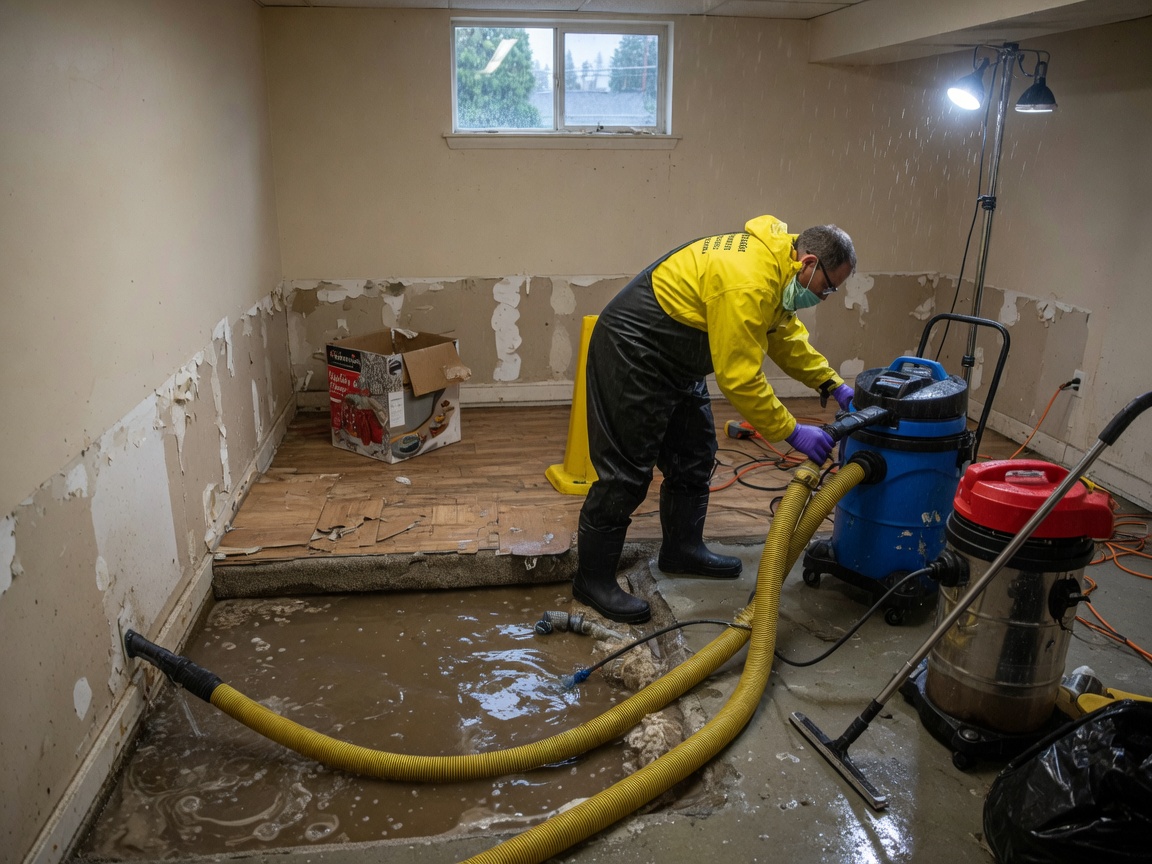
Seattle's frequent overcast skies and mild wet winters drive repeated water intrusion in older housing stock found throughout Capitol Hill, Queen Anne and Ballard. Many homes built before 1950 feature crawl spaces and basements with limited access that trap water against foundation walls. Extraction crews must navigate tight joist bays and aged plaster walls without spreading moisture into adjacent rooms. Hidden pockets behind lath and plaster often require targeted removal to prevent mold growth during the long damp season.
King County soil conditions, particularly clay-heavy areas near Discovery Park and West Seattle, slow natural drainage and increase hydrostatic pressure against foundations. Extraction equipment must handle both standing water and saturated subfloor materials common in these neighborhoods. Crews working from the 1410 Elliott Ave W base coordinate routes to reach Belltown high-rises and University District apartments quickly before water migrates to shared walls. Dry summers create false security, yet sudden heavy rains can overwhelm aging downspouts on Fremont and Capitol Hill properties.
Water extraction in Seattle also contends with multi-story Victorian and Craftsman homes where water travels downward through multiple floors. Technicians document moisture levels at each level before removal to satisfy King County permitting requirements for substantial repairs. Equipment choices shift between truck-mounted units for larger Bellevue and Kirkland jobs and portable extractors for narrow stairwells in older Seattle residences. Proper sequencing prevents re-wetting finished surfaces during the extraction phase.
Technician insight
In Seattle the thing that catches most people out with Water Extraction Services is how quickly water travels downward through the plaster and lathe in pre-1940 homes on Queen Anne and Capitol Hill during our long wet winters; once it hits the clay layer it pools against the foundation instead of draining, so you have to pull from multiple points or it just reappears two days later.
Ballard Bungalow After Heavy Rain
Water entered a 1920s Ballard home through an overwhelmed downspout and pooled in the crawl space against the north foundation wall. Extraction crews found saturated insulation and standing water extending under the kitchen floor. Portable units removed the water in stages while protecting original fir subfloors, then mapped remaining moisture before handing off to drying equipment.
Water Extraction Services Services We Offer
✓Basement Water Extraction
Removes standing and trapped water from Seattle basements common in Queen Anne and Capitol Hill homes before it reaches electrical systems or insulation.
✓Crawl Space Water Removal
Extracts moisture from low-access crawl spaces under Ballard and Fremont residences where poor ventilation allows water to linger against joists.
✓Emergency Flood Extraction
Rapid response extraction after storms or pipe bursts for properties near Pike Place Market and Seattle Center where quick action limits secondary damage.
✓Carpet and Pad Extraction
Pulls water from saturated carpet and padding in University District apartments and West Seattle homes to reduce drying time and odor risks.
✓Multi-Story Water Extraction
Manages downward water migration through older multi-level homes in Belltown and Capitol Hill using staged extraction points on each floor.
Water Extraction Services Cost in Seattle, WA
| Service | Typical Range | What Affects It |
|---|---|---|
| Single-room extraction | $450–$850 | Higher in multi-story Capitol Hill homes with limited access |
| Basement or crawl space extraction | $750–$1,600 | Increases with clay soil saturation around West Seattle foundations |
| Multi-floor extraction | $1,200–$2,400 | Common in Queen Anne Victorians where water travels downward |
| After-hours or weekend response | $200–$400 | Added for calls outside Mon–Fri 8am–6pm or Sat 9am–2pm |
Ranges are typical for Seattle, WA and confirmed with an exact written quote before any work starts.
How it works
- 1
Site Assessment
Technicians inspect affected areas in the specific Seattle neighborhood and identify water sources while documenting moisture in walls and floors.
- 2
Water Removal
Truck or portable extractors pull standing water from basements, crawl spaces or living areas before it spreads to neighboring units.
- 3
Moisture Mapping
Readings confirm remaining saturation in subfloors and wall cavities typical of older King County construction.
- 4
Final Extraction Pass
Targeted tools address hidden pockets before equipment is removed and the site is prepared for drying.
Pricing
Pricing depends on water volume, access difficulty and number of affected levels in older Seattle homes.