Seattle’s older housing stock in neighborhoods like Capitol Hill and Fremont often features plaster walls over lathe and uninsulated crawl spaces that trap water after prolonged winter rains. When floodwater enters these cavities it travels along joists and into adjacent units in multifamily buildings common on Queen Anne. Extraction must account for hidden moisture behind baseboards and under hardwood floors installed before modern vapor barriers.
Dry summers and frequent overcast days slow natural evaporation, so industrial dehumidifiers and air movers run longer than in drier climates. Properties near Discovery Park or along the slopes of West Seattle face additional runoff from saturated soils that can re-enter foundations days after the initial event. Technicians check grading around the home and downspout extensions to prevent repeat intrusion.
King County building codes require permits for structural repairs after significant flooding; work in Belltown high-rises or University District apartments often involves coordination with property management to meet those rules. Sewage-tainted water from street flooding in low-lying areas like Ballard demands separate containment and disposal protocols distinct from clean rainwater events.
Nearby cities such as Bellevue and Kirkland share similar wet-winter patterns, yet Seattle’s denser older stock means more jobs involve selective demolition of waterlogged drywall rather than whole-room replacement. Documenting moisture readings at multiple depths in subfloors protects both the homeowner and any future insurance claims.
Technician insight
In Seattle the thing that catches most people out with Flood Damage Restoration is hidden moisture trapped behind plaster in 1910–1930s homes in Fremont and Ballard; the frequent winter rains keep crawl spaces damp long after the surface looks dry, so we always pull baseboards and check joist ends before declaring the job done.
Queen Anne Basement Flood
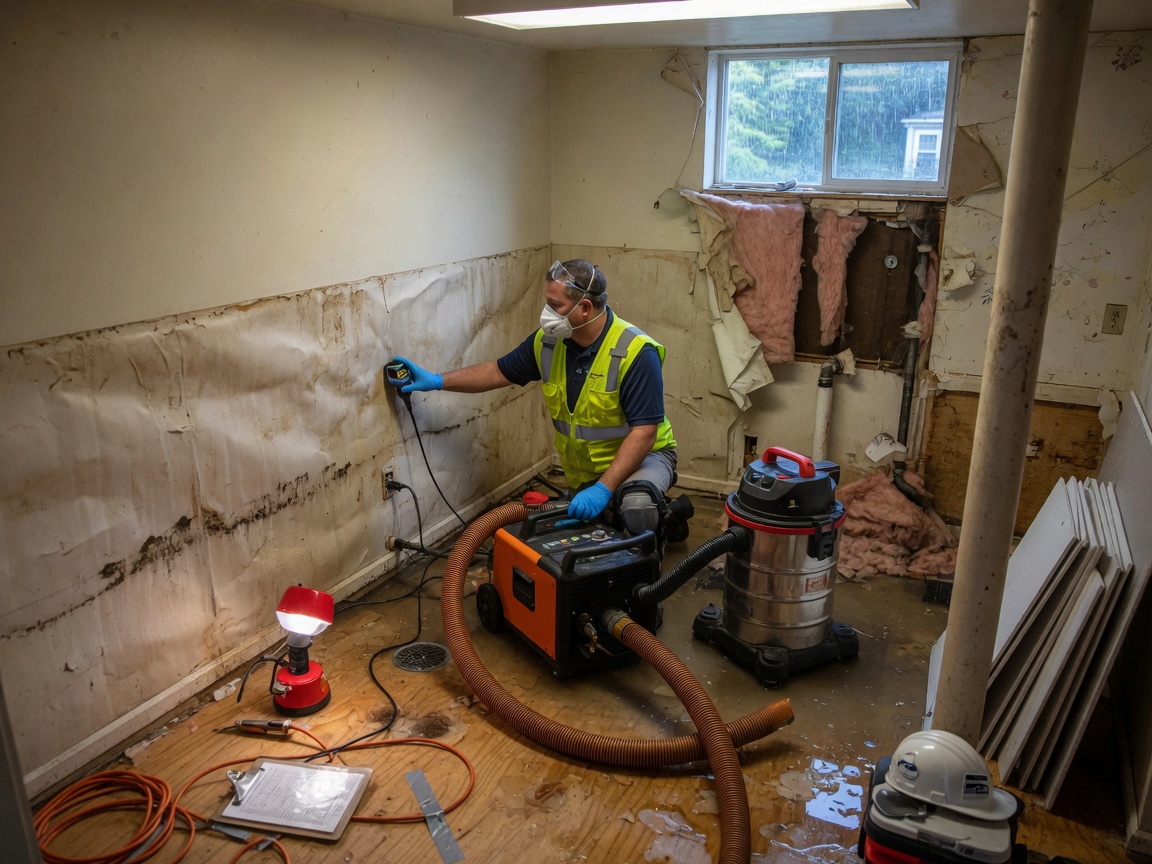
Heavy overnight rain sent street water into a 1920s Queen Anne basement through an old foundation crack. We found saturated plaster walls extending three feet up and standing water under the laundry room subfloor. Extraction and targeted drying prevented mold growth; selective wall removal and drying equipment ran for five days until readings stabilized.
Flood Damage Restoration Services We Offer
✓Basement Flood Cleanup
Remove standing water and saturated materials from below-grade spaces common in Capitol Hill and Fremont homes after winter storms.
✓Emergency Water Extraction
Rapid pump-out and containment for sudden flooding from heavy rains or backed-up storm drains in Ballard and Queen Anne.
✓Structural Drying Services
Targeted drying of plaster walls, joists and subfloors using equipment sized for Seattle’s slow-evaporation climate.
✓Sewage Backup Restoration
Safe removal and disinfection after contaminated water enters homes near low-lying streets in West Seattle or the University District.
✓Hardwood Floor Restoration
Salvage or controlled demolition of pre-war hardwood floors found in many Capitol Hill and Queen Anne properties.
✓Crawl Space Flood Recovery
Moisture mapping and drying of older crawl spaces that trap water under homes in Fremont and Ballard.
Flood Damage Restoration Cost in Seattle, WA
| Service | Typical Range | What Affects It |
|---|---|---|
| Initial Assessment | $200–$450 | Larger multifamily buildings or properties with multiple affected levels increase the range. |
| Water Extraction | $800–$2,200 | Depends on volume and whether sewage containment is required. |
| Structural Drying (per day) | $600–$1,400 | Longer run times common during Seattle’s overcast winter weeks. |
| Selective Demolition | $1,200–$3,500 | Higher in older plaster-and-lathe homes in Capitol Hill and Fremont. |
| Final Moisture Verification | $150–$300 | Included when full restoration package is contracted. |
Ranges are typical for Seattle, WA and confirmed with an exact written quote before any work starts.
How it works
- 1
On-Site Assessment
Technician inspects affected areas, checks neighboring units in multifamily buildings, and records moisture levels in walls and floors.
- 2
Water Extraction
Pumps and vacuums remove standing water while containing any sewage-tainted material for proper disposal.
- 3
Drying and Dehumidification
Air movers and dehumidifiers run until readings meet industry dry standards, often requiring extra days during overcast Seattle weather.
- 4
Selective Demolition and Repairs
Remove irreparably damaged materials, then coordinate permitted structural fixes with King County requirements.
- 5
Final Verification
Post-drying moisture checks and walkthrough confirm the structure is dry before any finishing work begins.
Pricing
Pricing varies by water volume, affected square footage, and whether sewage is involved. Upfront quotes are provided after the initial assessment.