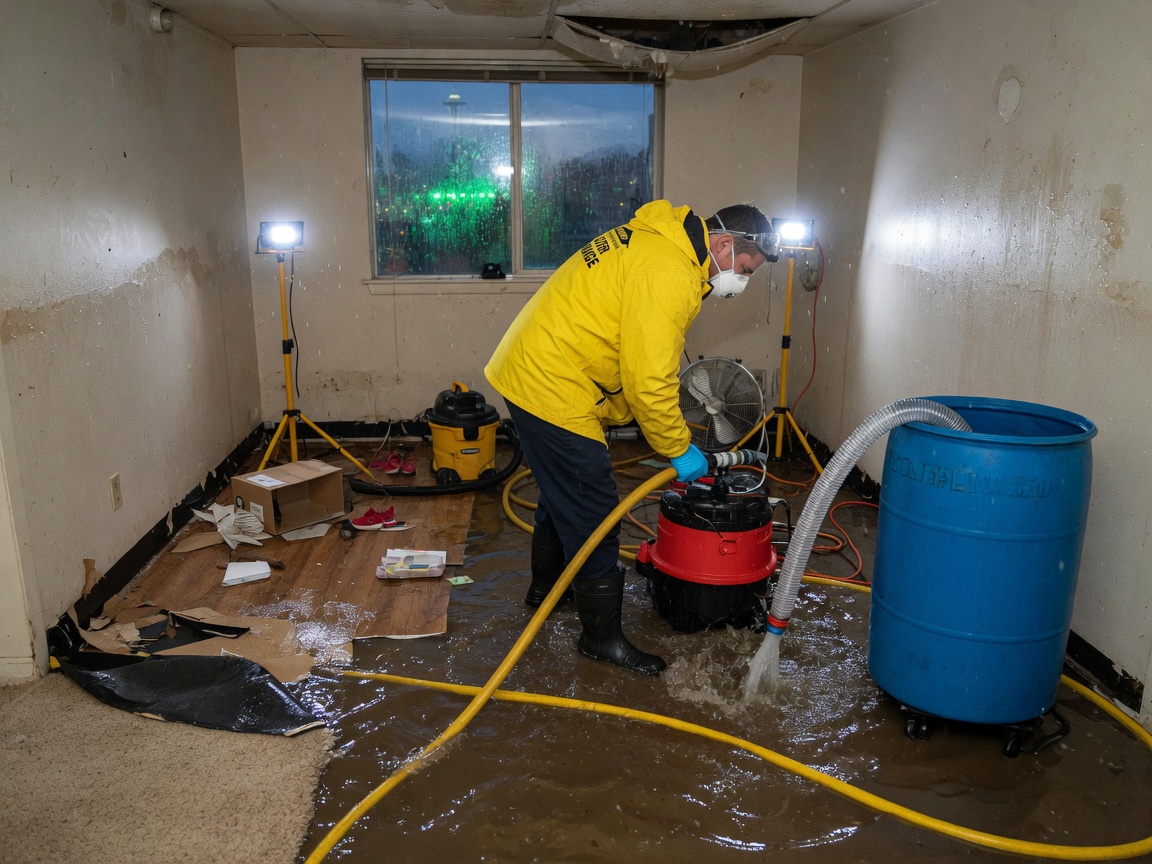
Bainbridge Island properties face steady winter rain that finds its way into crawl spaces and attics of homes built before the 1980s. Our trucks leave the Seattle shop on Elliott Ave W, catch the ferry at Pier 52, and reach Winslow or the south end within the hour when calls come in during the wet season. We focus on extraction and drying before mold sets in on the island’s cedar-sided houses and waterfront lots.
Many Bainbridge homes sit on lots with limited side access and septic systems that complicate pump-out work after a pipe burst or roof leak. We stage equipment at the ferry terminal when needed and use smaller dehumidifiers on narrow driveways common around Battle Point and Fort Ward. Dry summers do not erase the hidden moisture that lingers under pier-and-beam floors after months of overcast weather.
King County ferry schedules dictate our response windows, so we book morning sailings for larger jobs and keep a second crew on standby for afternoon calls from the University District side. Homeowners on the island get the same upfront pricing and same-day drying plans we use in Ballard or Queen Anne, just adjusted for the boat ride.
Around Bainbridge Island
We regularly work near:
- 📍Winslow Ferry Terminal
- 📍Battle Point Park
- 📍Fort Ward Park
- 📍Bainbridge Island Historical Museum
- 📍Strawberry Hill Park
- 📍Bainbridge High School
Water Damage Repair in Bainbridge Island — Local Notes
- •Ferry schedules from Pier 52 limit equipment arrival windows, so we pre-stage portable extractors on the island for repeat waterfront clients.
- •Older Winslow and Rolling Bay homes often have pier-and-beam foundations where standing water travels under floor joists before homeowners notice ceiling stains.
- •Low-lying lots near Battle Point Park collect runoff from surrounding hills, requiring extra perimeter trenching before final drying on those properties.
- •Cedar and shake roofs on south-end homes hold moisture longer after the dry summer ends, leading to attic leaks that travel down interior walls.